
1 UP AIR SQN NCC
About NCC (Air Wing)
The present day NCC (National Cadet Corps) came into existence on 16 Apr 1948, through XXXI Act of Parliament. NCC was formally inaugurated on 15 Jul 1948. The Girls Division of the NCC was raised in July 1949. On 01 April 1950, Air Wing was raised, with one Air squadron each at Bombay and Kolkata. The Naval Wing of the NCC was raised in July 1952, thus completing the true representation of all services in the Corps. Today the NCC has more than 13 Lakh strength. National Cadets Corps (NCC) day is celebrated every year on the fourth Sunday in the month of November. NCC stands strong with its Motto of “Unity and Discipline”.
NCC is the single largest youth organisation in the world which provides an opportunity in multifarious activities that help an individual to build a strong character, be disciplined and develop camaraderie. It functions under the Ministry of Defence, grooming young school, college, and university students into disciplined and patriotic citizens. The NCC Act & Rules 1948 lay down the eligibility conditions for enrolment. However, over the years with the increase in popularity of the Corps, the number of students desiring to join NCC has increased many fold vis-a-vis the number of vacancies available. To provide fair and equal opportunity to all desirous students, a need was felt to lay down guidelines for short listing eligible students for enrolment, to be followed across the Corps.
(a) Pre-Independence Origin (1917–1947)
The foundations of a national student military training scheme trace back to the British colonial era, initiated due to manpower shortages during World War
- University Corps (1917): Created under the Indian Defence Act 1917 to recruit university students and fill shortages within the British Indian Army.
- University Training Corps (1920): Replaced the University Corps under the Indian Territorial Act. This transition aimed to elevate the corps’ status, permitting cadets to wear army uniforms and marking an early step toward the “Indianisation” of the armed forces.
- University Officers Training Corps (1942): Renamed as the UOTC during World War II. However, the UOTC fell short of expectations during wartime conditions, driving the colonial and future national leadership to envision a superior, permanent peacetime youth training scheme.
(b) The Genesis of Modern NCC (1946–1948)
Following the end of World War II, Indian national leaders recognized the need for a national youth organisation focused on character development and military training.
- The Kunzru Committee (1946): Set up at the behest of Pandit Jawaharlal Nehru, a committee led by Pandit H.N. Kunzru was tasked with outlining a comprehensive cadet scheme for nationwide schools and colleges.
- The Kashmir War (1947–1948): The outbreak of conflict in Kashmir highlighted the urgent necessity of creating a robust armed forces reserve and disciplined civic support system.
- The NCC Act (1948): The draft bill passed through the Indian Legislature on 8 April 1948 and received the Governor General’s assent on 16 April 1948, formally establishing the National Cadet Corps Act 1948.
- Official Raising: The nucleus of the NCC Secretariat opened on 31 March 1948 under its first Director, Col. Gopal Gurunath Bewoor. The NCC was formally inaugurated across Indian educational institutions on 15 July 1948 with an initial intake of 20,000 cadets. Prime Minister Nehru presided over the raising of the very first official unit in Delhi on the fourth Sunday of November 1948—a date traditionally celebrated as NCC Day.
(c) Timeline of Expansion & Global Tri-Service Image
The NCC rapidly transitioned from a standard infantry training wing into a comprehensive tri-service program:
- 1948: Modern NCC established via the National Cadet Corps Act
- 1949: Girls Division raised to provide equal opportunities for female students
- 1950: Air Wing added with squadrons launched in Bombay and Kolkata
- 1952: Naval Wing raised, completing the organization’s tri-service framework
- Social Integration (1952): Under Nehru’s guidance, the NCC curriculum expanded to mandate community development and social service activities alongside basic military drills.
- Introduction of the NCC Flag (1954): A dedicated inter-service tricolour flag was introduced. Its colours represent the three branches: Red for Army, Deep Blue for Navy, and Light Blue for Air Force. It features 17 lotuses encircling the gold crest, symbolizing the 17 national state directorates.
- Establishing the Motto (1980): After years of deliberation in the Central Advisory Committee, the NCC officially selected “Unity and Discipline” (Ekta aur Anushasan) as its binding motto on 12 October 1980.
Operational Role in National Defence
Though primarily a youth development framework, the NCC has historically stepped up as a vital second line of defence during critical national emergencies.
During both the 1965 and 1971 Indo-Pakistani Wars, NCC cadets actively supported civilian and military infrastructure. They ran logistics inside ordinance factories, supplied arms and ammunition directly to transport lines, conducted civil defence rescue operations, manned traffic control hubs, and ran visual patrol operations to help detect enemy paratroopers. Following these conflicts, the NCC syllabus was heavily revised to balance military familiarity with robust community leadership, emergency relief, and civic nation-building.
National Organizational Structure
The NCC is headed by the Directorate General of NCC (DG NCC), based in New Delhi. The structure flows downward from the national level to individual educational institutions:
- Headquarters DG NCC: New Delhi
- 17 State Directorates: Headed by Major Generals / Rear Admirals / Air Vice Marshals
- Group Headquarters: Headed by Brigadiers / Commodores / Air Commodores
- NCC Battalions: Headed by Colonels / Captains / Group Captains
- Colleges / Schools: Managed by Associate NCC Officers – ANOs
Associate NCC Officers (ANO) Ranks
ANOs are school teachers or college professors who undergo rigorous military training at the NCC Officers Training Academy (Kamptee or Gwalior). They manage the NCC units within their respective institutions and wear uniform ranks parallel to the military.
Army Wing (SD) | Naval Wing (SD) | Air Wing (SD) |
Lieutenant | Sub Lieutenant | Pilot Officer |
Captain | Lieutenant | Flying Officer |
Major | Lieutenant Commander | Flight Lieutenant |
Who can join NCC(Air Wing)?
Qualifications for Enrolment in the Senior Division/ Senior Wing
The applicant must:
- Be on the roll of the college which has NCC.
- Be a citizen of India or a subject of Nepal unless relaxed by the Central Government.
- Be under the age of 26 years & studying in class XI or above.
- Be over 15 years of age, studying in class XI & above and below 26 years of age, in the case of Senior Wing.
- Be of a good character.
- Satisfy the standard of physical fitness in height, chest measurement and other respects as specified by the Ministry of Defence, Government of India.
- Not have been convicted of an offence involving moral turpitude and sentenced to a punishment other than one of fine or of imprisonment in default of payment of fine, such sentence not having been subsequently reversed or remitted or the offence pardoned.
- Not have been dismissed from the University Corps of the Indian Territorial Force or the National Cadets Corps or the Territorial Army or the Indian Armed Forces.
- Not be a member of any communal organization or political organization or an organization believing in violence or communal disharmony.
- Cadets of Air Wing of the NCC must be in good mental and bodily health and free from any physical defect likely to interfere with their training. They must be free from active or latent, acute or chronic medical or surgical disability or infection as would entail a degree of functional incapacity which is likely to interfere with the safe handling of modern aircraft in flighty.
The particular standards applicable to IAF laying are as follows:
- Height – not less than 64″.
- Leg length – hip to heel not less than 39″.
- Visual acuity – Unaided vision of 6/6 in one eye and at least 6/9 in the other if correctable to 6/6. Case of squint latent or manifest, or Trachoma of any degree will not be acceptable. The fields of vision should not be restricted. Colour Vision-Normal or defective safe. Cases of acute or chronic suppurative otitis media or perforation of the tympanic membranes are not acceptable. The tympanic membrane should be fully mobile and the Eustachian tubes patent. The urine must be free of sugar and albumen. Only proved cases of renal glycosuria are acceptable, if sugar is present.
- Body system – All body systems must be normal. The individual must have complete use of his four limbs.
- Height and chest measurements -These should be according to height and age group.
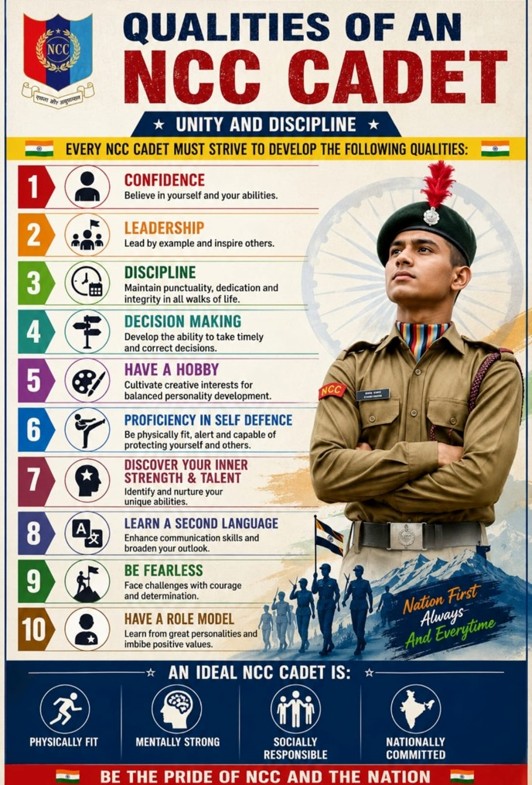
NCC (Air Wing) Training and Activities in the College
The National Cadet Corps (NCC) Air Wing is designed to develop discipline, leadership, patriotism, and aviation awareness among cadets. It provides a unique blend of military training, aviation exposure, adventure activities, and community service.
(a) Institutional Training
Regular parades and classes are conducted at colleges and NCC units. Training includes: Drill and marching, Leadership development, Personality development, Physical fitness First aid and health awareness, Aviation and Air Force-related subjects, Aero-modelling and basic aerodynamics
(b) Aviation Training
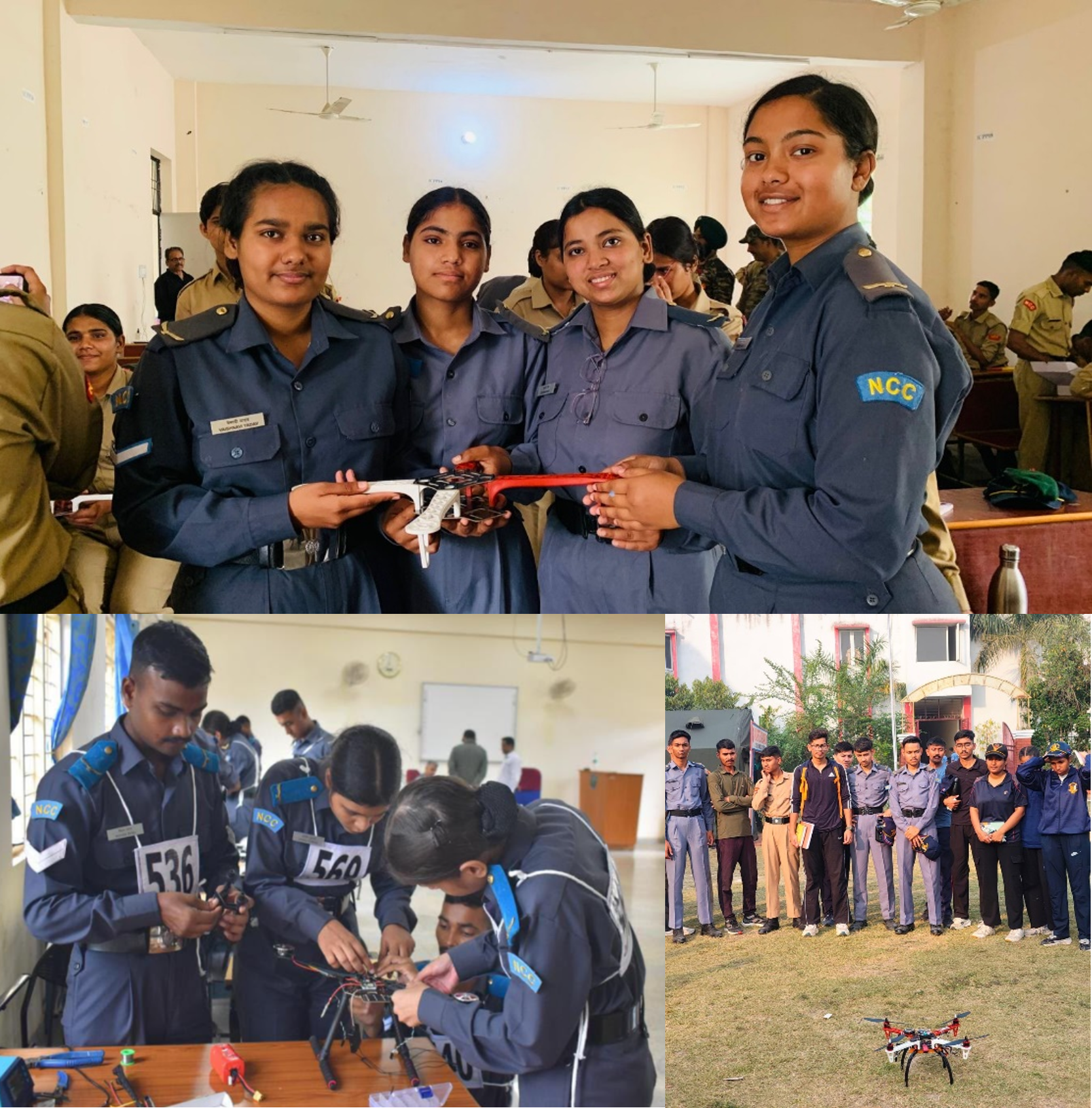
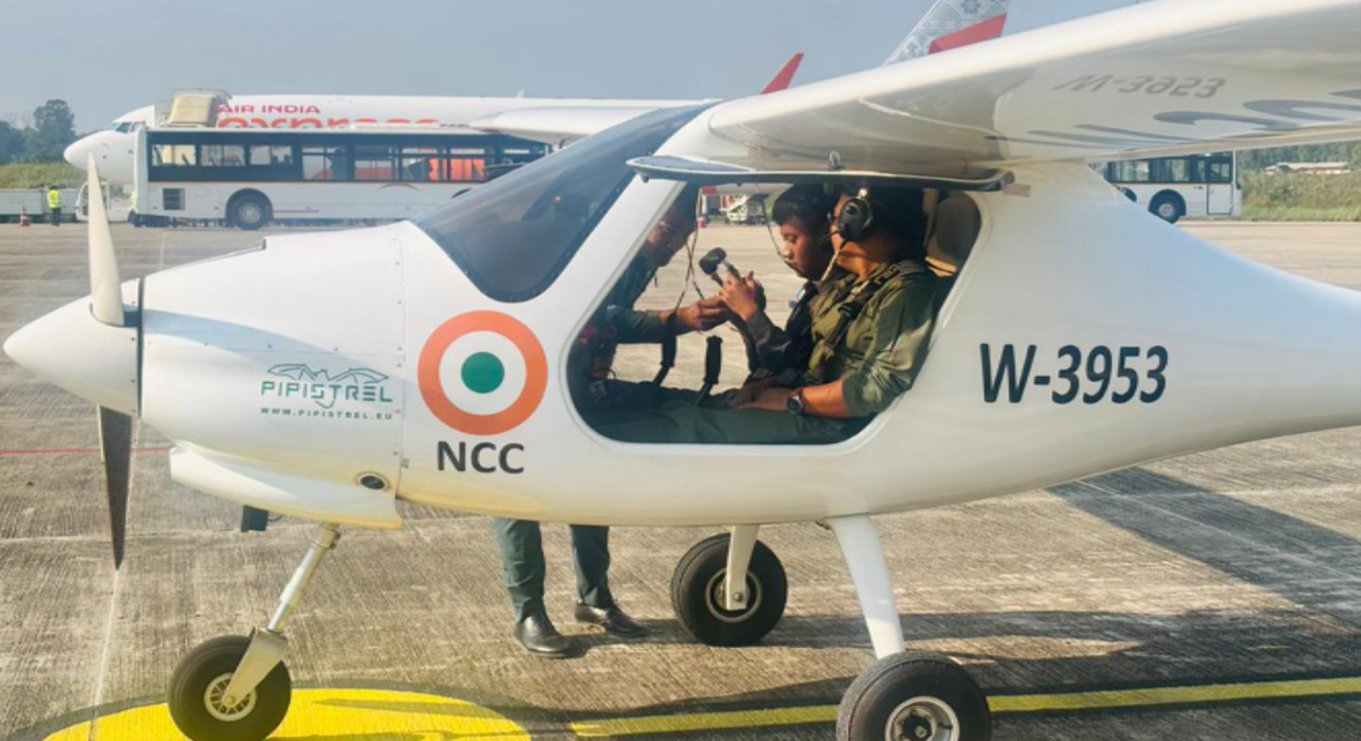
A major attraction of the Air Wing is aviation exposure: Microlight flying, Flying simulator training, Aero-modelling, Drone training, Principles of flight and aircraft systems, Air navigation and aviation knowledge.
(c) Prestigious Opportunities
Outstanding cadets may get opportunities for: Republic Day Camp (RDC), All India Vayu Sainik Camp (AIVSC), Youth Exchange Programme (YEP), Air Force and Army Attachments. Para Basic Course.
(d) Adventure Activities
Air Wing cadets are encouraged to participate in adventure training such as: Trekking, Mountaineering, Rock climbing, Parasailing, Paragliding, Microlight flying, Water sports and rafting.
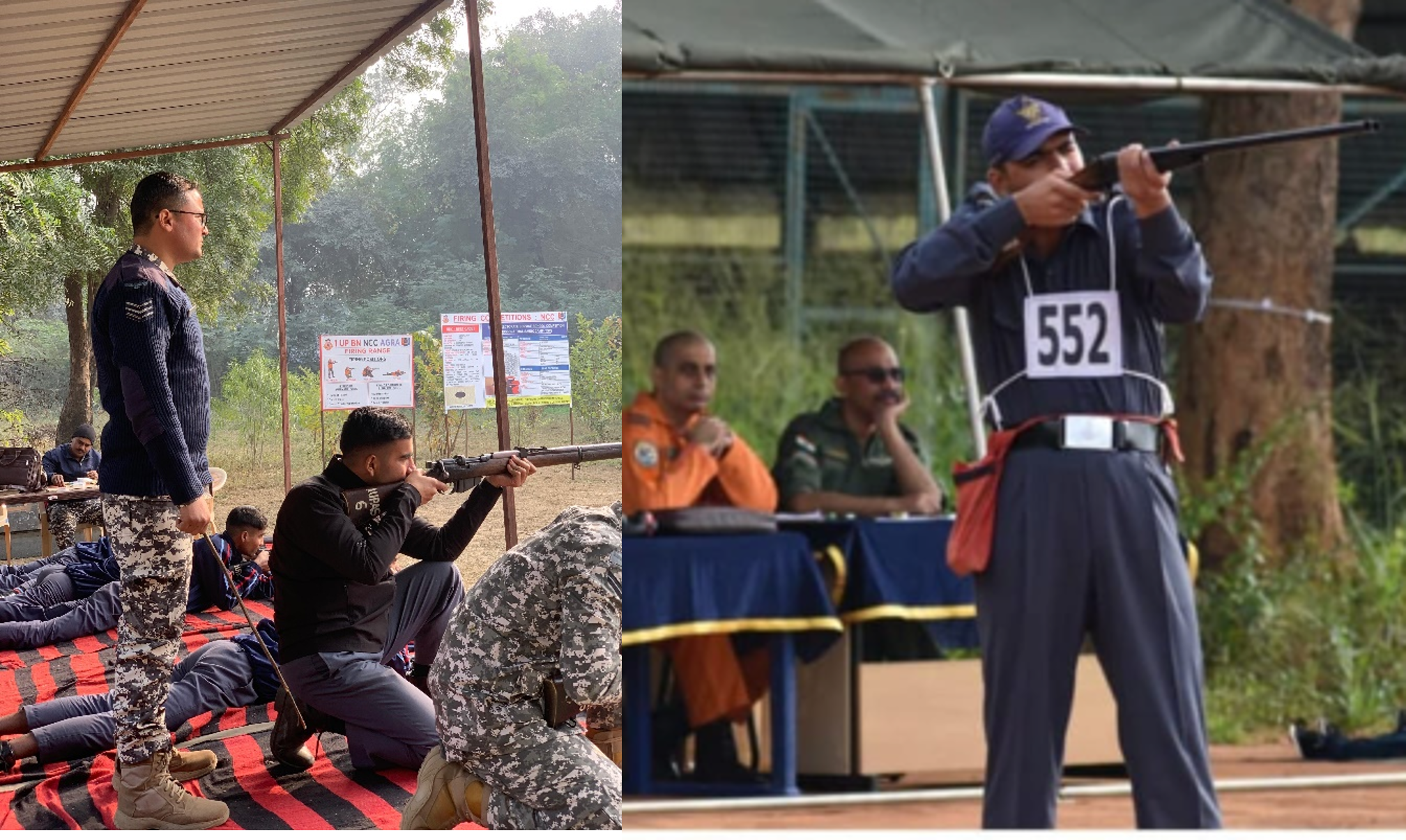
(e) Weapon Training and Firing
Cadets receive supervised training in: Range firing, Marksmanship, Safety procedures, Simulator shooting.
(f) Observance of Important National and International Days
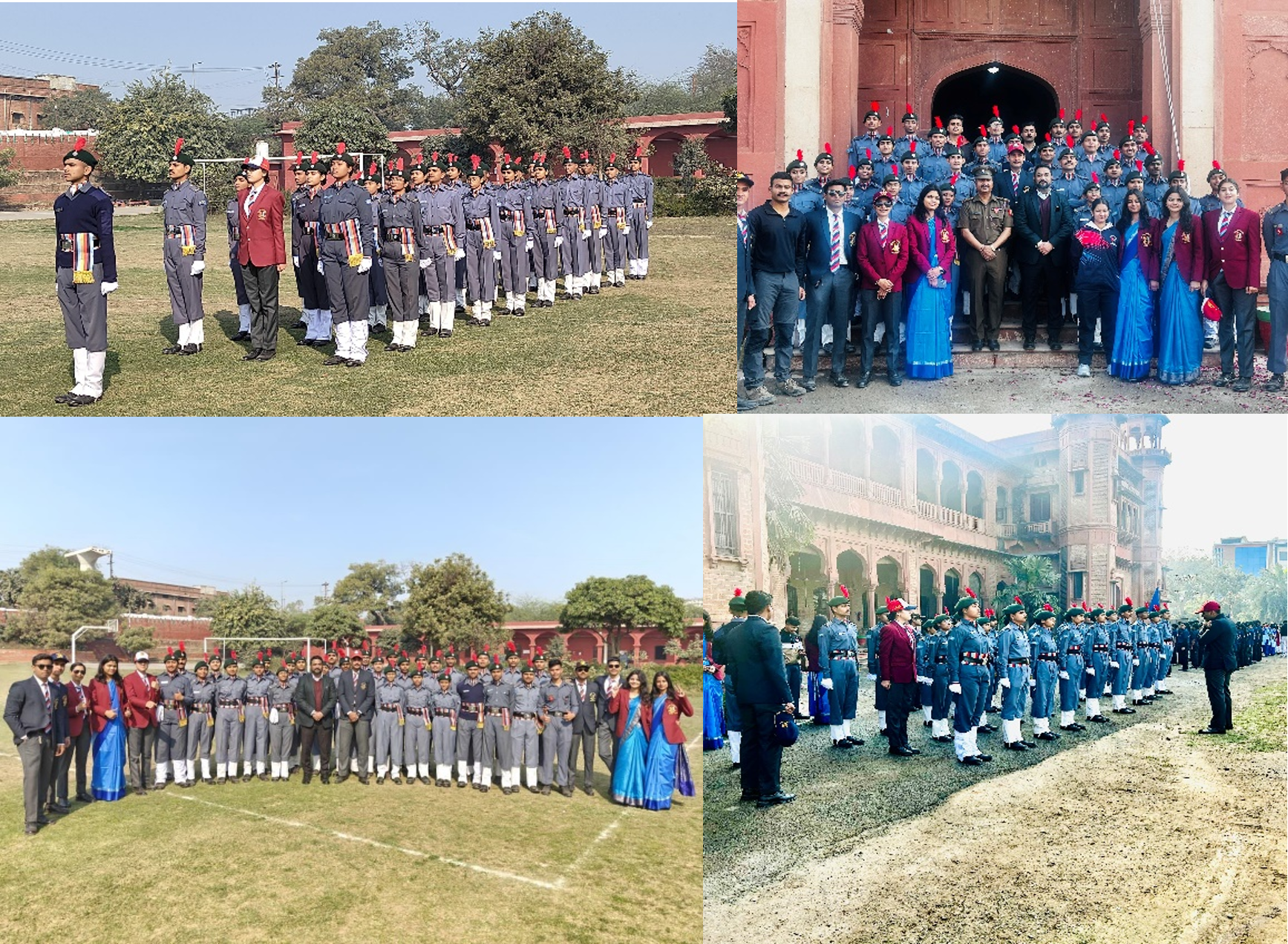
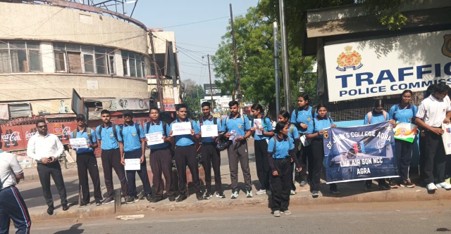
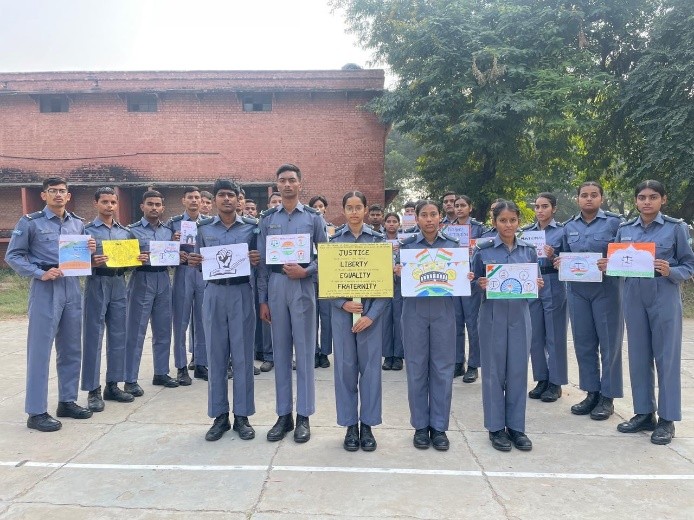
The NCC Air Wing of St. John’s College actively observes various national and international days to promote awareness, social responsibility, and community welfare among cadets. Throughout the year, cadets participate in activities such as rallies, poster-making competitions, seminars, awareness campaigns, and community outreach programmes.
(g) Some of the important days observed include:
- World No Tobacco Day (May 31) – To spread awareness about the harmful effects of tobacco and encourage a healthy lifestyle.
- World Environment Day (June 5) – Celebrated through tree plantation drives, cleanliness campaigns, and environmental awareness activities.
- National Girl Child Day (January 24) – To promote gender equality, women’s empowerment, and the importance of education for girls.
- International Women’s Day (March 8) – To honour the achievements and contributions of women in society.
- International Yoga Day (June 21) – To encourage physical fitness, mental well-being, and a healthy lifestyle.
- Independence Day (August 15) and Republic Day (January 26) – Celebrated with patriotic fervour through parades, cultural programmes, and flag-hoisting ceremonies.
- Swachh Bharat Abhiyan Activities – Conducted regularly to promote cleanliness and civic responsibility.
- Constitution Day (November 26) – To create awareness about the Constitution of India and citizens’ duties.
- Armed Forces Flag Day (December 7) – To pay tribute to the sacrifices and service of the Indian Armed Forces.
Prestigious Camps Around the Year
(a) AIVSC (ALL INDIA VAYU SAINIK CAMP)
Vayu Sainik camp exposure in NCC involves cadets participating in an Indian Air Force organized training camp. Cadets learn about Air Force operations, aircraft, and basic aviation principles. Activities include lectures, simulator training, drills, and visits to air bases. It enhances discipline, leadership, and awareness of Air Force careers.
(b) RDC (REPUBLIC DAY CAMP)
The RDC camp exposure provides participants with leadership training, discipline, and teamwork experience. The camp fosters national integration and social responsibility through various cultural and educational activities.
(c) SPECIAL NATIONAL INTEGRATION CAMP
The Special National Integration Camp (SNIC) in National Cadet Corps is a significant camp that brings together cadets from different states of India. It promotes unity in diversity, cultural exchange, discipline, and teamwork. Through various activities, performances, and interactions, cadets develop national pride and strengthen bonds of friendship across the country.
(d) DRONE TRAINING CAMP
A drone training camp is a specialized program where participants learn to operate and manage unmanned aerial vehicles (UAVs) safely and effectively. It typically covers basic flight controls, navigation, aerial photography, surveillance techniques, and safety regulations. Cadets or trainees gain hands-on experience in flying drones, understanding their technical components, and applying them in real-life scenarios such as disaster management and reconnaissance.
(e) TREKKING
The NCC Trekking Camp at Manali (AVIMAS) aimed to build endurance, discipline, and teamwork among cadets. Through regular treks, physical training, and group activities, participants improved their stamina and resilience in a high-altitude environment. The camp proved to be a valuable experience for overall personality development and confidence building.
Achievements of our Cadets
(a) One of our cadets got chance to visit Foreign Land – CSUO Anesh Pratap Singh
CSUO (Cadet Senior Under Officer) Anesh Pratap Singh, a Cadet of the NCC Air WING within the BCA Department at St. John’s College, Agra, has had a remarkable year defined by leadership and athletic triumph.
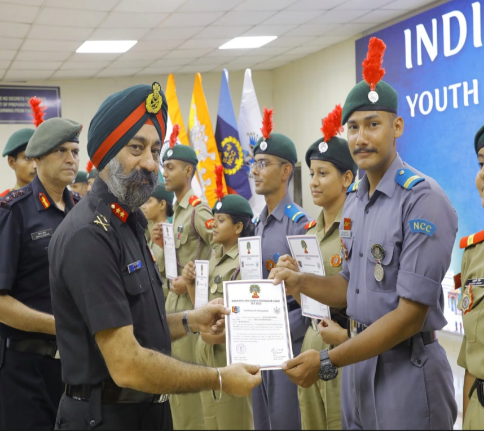
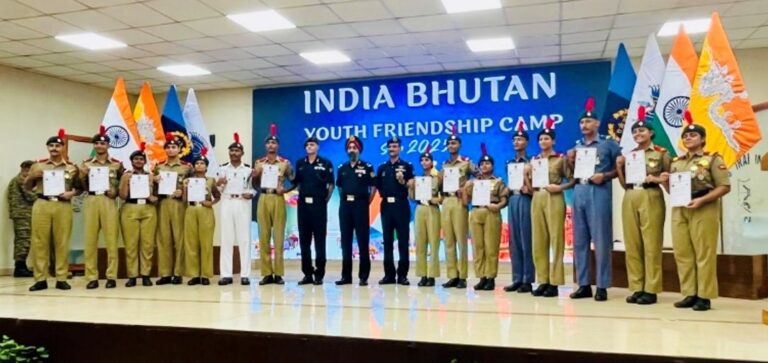
In September 2025, CSUO Anesh represented the COLLEGE, STATE and INDIA on an international stage during the India-Bhutan Youth Friendship Camp fostering cross-cultural ties between the two countries youth and diplomacy.
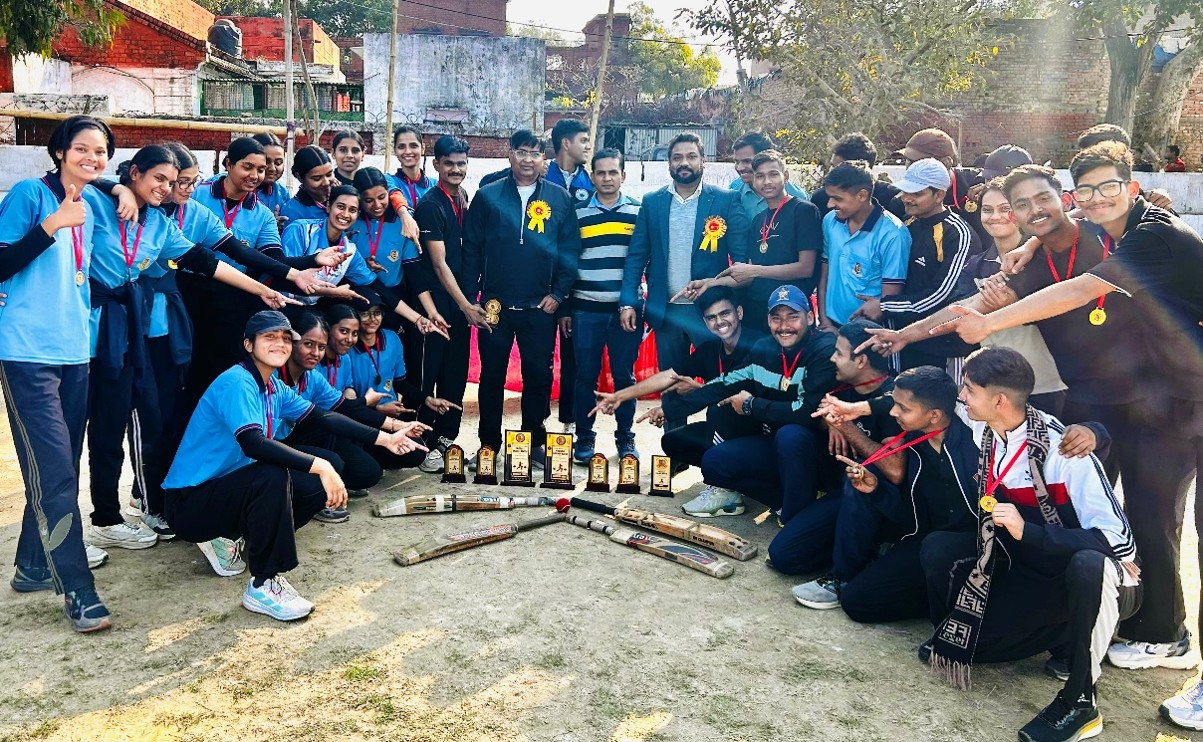
Back on college campus, his leadership was instrumental in securing team skills and sports glory. Under his captaincy, the St. John’s College Cricket Team clinched a victory against Agra College in a highly competitive friendly match. Anesh further extended his winning streak to the court, securing another win for the college in a badminton face-off against the same rivals.
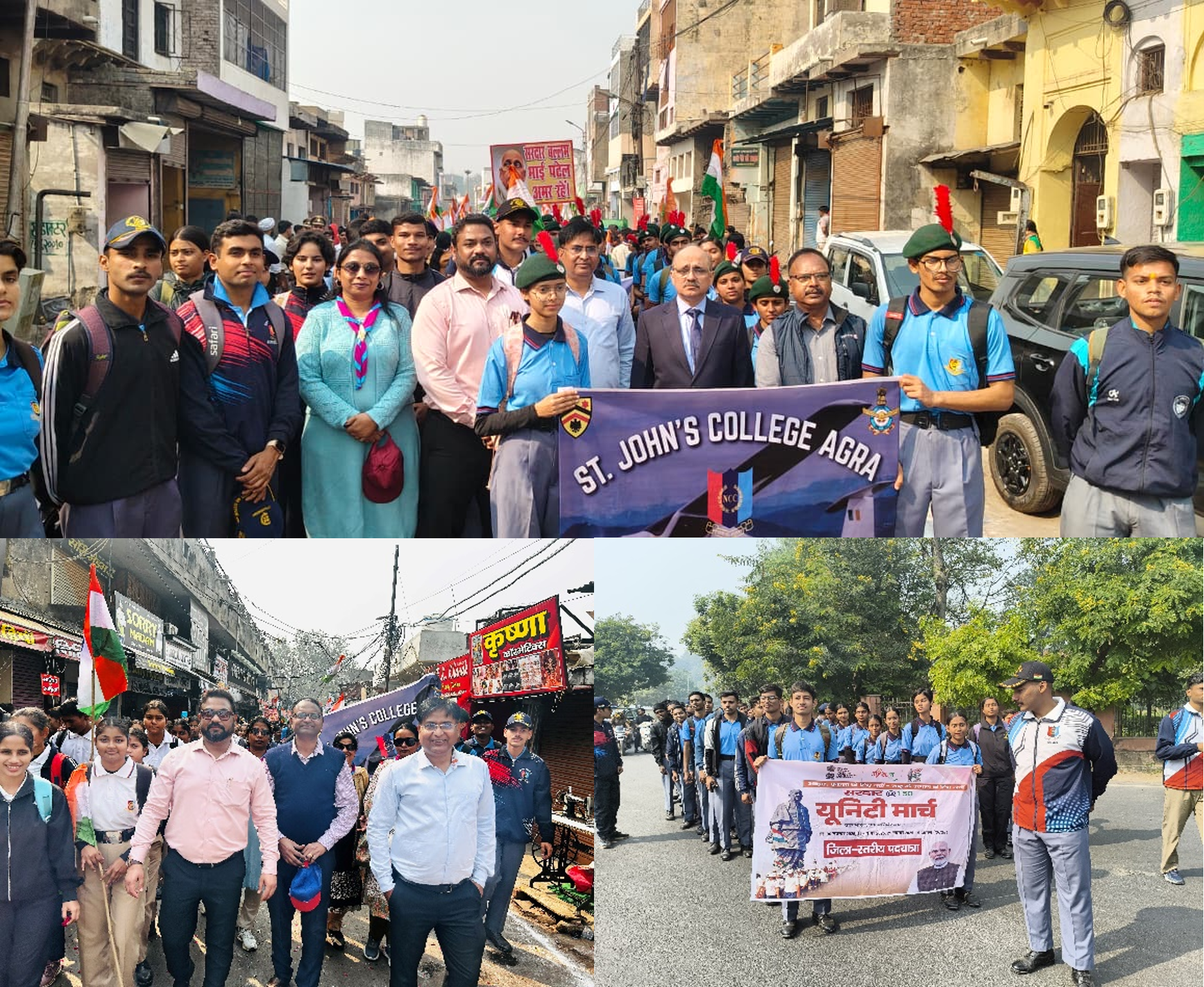
He also participated in the National events like conducting yoga in unit on the international yoga day and a unity march on sardar Vallabhbhai Patel anniversary. The pinnacle of the year came during the Annual Sports Day, where Anesh led the NCC Air Wing contingent. the title Through his roles in the NCC and on the field, CSUO Anesh Pratap Singh continues to set a high standard of discipline and dedication for his peers, College and the upcoming juniors.
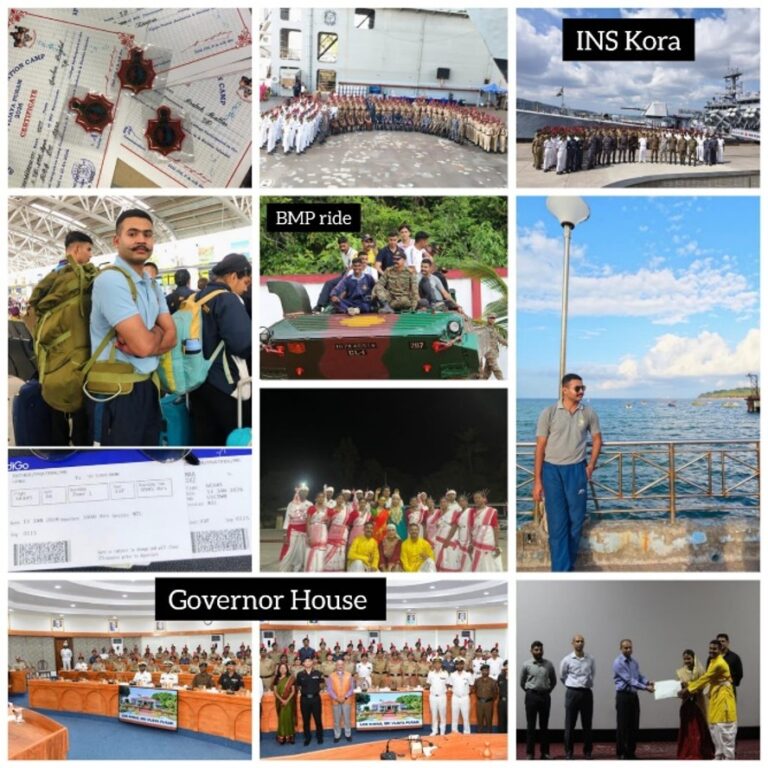
(b) Special National Integration Camp 2026 (Andaman and Nicobar Islands) (12th – 23rd January 2026) – CDT Prateek Rathore
The Special National Integration Camp (SNIC) in National Cadet Corps is a significant camp that brings together cadets from different states of India. It promotes unity in diversity, cultural exchange, discipline, and teamwork. Through various activities, performances, and interactions, cadets develop national pride and strengthen bonds of friendship across the country.
(c) Cadet Abhilasha Gautam
She participated in Ballet performance and group dance of U.P. Directorate in presence of CDS General Anil Chauhan and Honorable Defence minister Shree Rajnath Singh.

(d) Cadet Vineet Prajapati
Cadet Vineet has been selected for “Guard of Honour” which is the most prestigious and the most honorable event of RDC. It is a highly prestigious and precise ceremonial drill performed by selected cadets to welcome top dignitaries like The Prime Minister, The President, Raksha Mantri or Chief of Defence Staff and Chief of Army Staff.
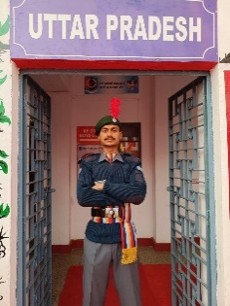
(e) Cadet Sumit Kushwah
Cadet Sumit participated in Republic Day Camp 2026 and in the Prime Minister Rally event. He also participated in PMR on 28th Jan 2026 at Cariappa Parade ground.
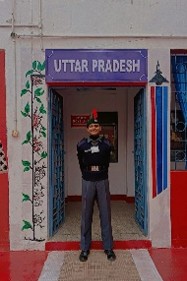
(f) Cadet Dinesh Kumar
Participated in Prime Minister Rally 2026. He also had a visit to the Air Chief Marshal and Naval Chief’s home and got a golden chance to share a high tea with them.
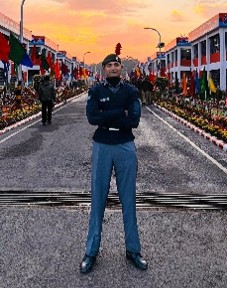
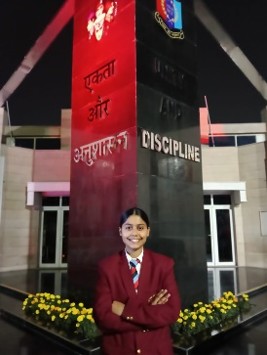
(g) Cadet Shilpi Bhadoriya
She has been declared the best cadet of Uttar Pradesh Directorate at RDC 2026. She actively participated in RDC Cultural programme.
(h) Successful Recommended Cadets
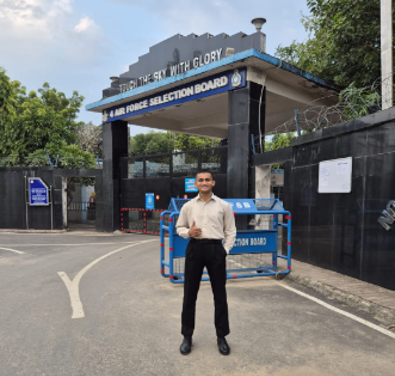
(1) Cadet Monish Kushwah
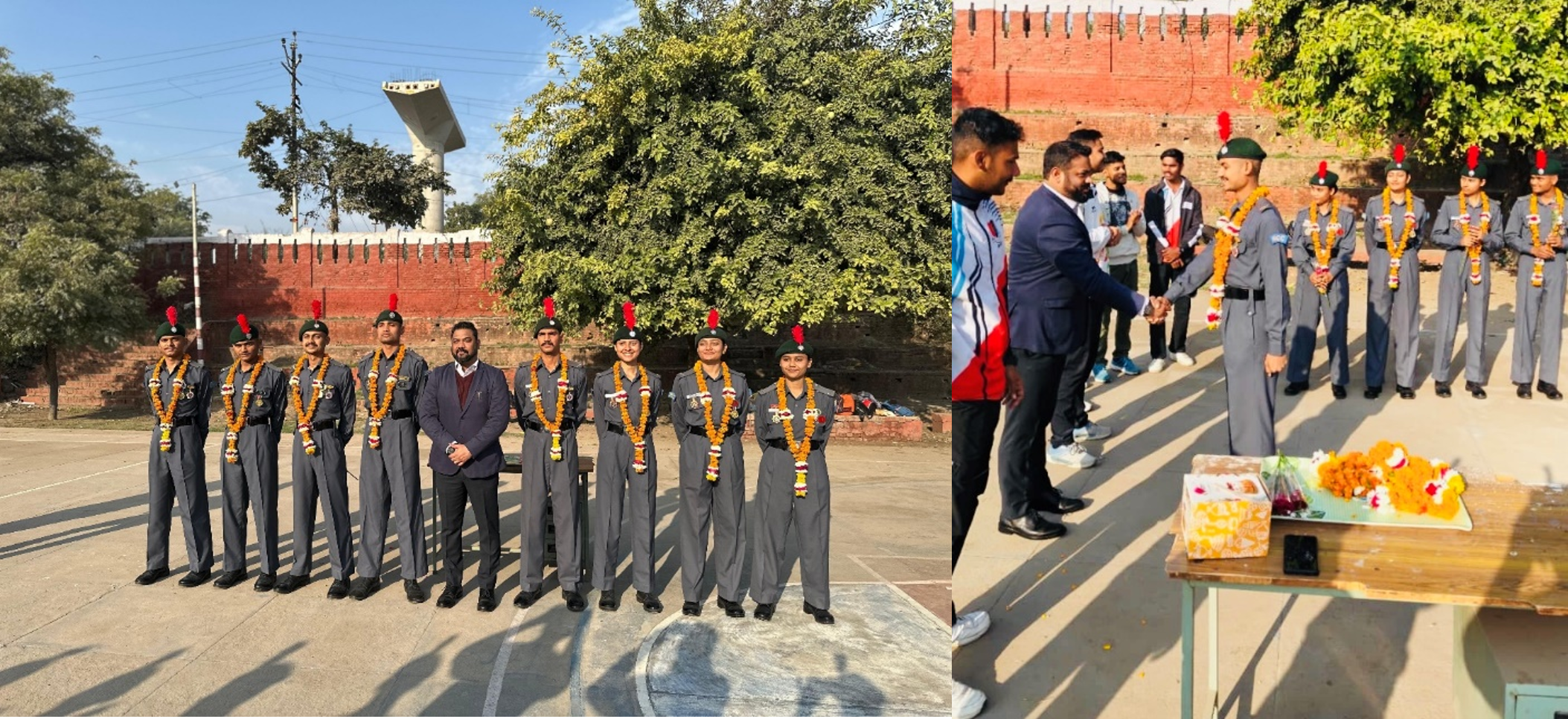
Cadet Monish Kushwah is one of the proud achievers of the NCC unit of St. John’s College, Agra, who successfully earned selection for the Air Force Academy (AFA) through special NCC entry. During his NCC journey, he represented the Directorate at the prestigious Republic Day Camp (RDC), one of the highest honors for an NCC cadet. His dedication, discipline, leadership qualities, and commitment to excellence enabled him to achieve success both in NCC and in his pursuit of a career in the Armed Forces. His achievements continue to inspire junior cadets to strive for excellence and serve the nation with pride.
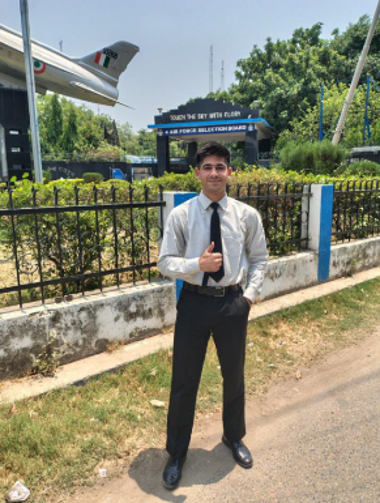
(2) Cadet Om Chauhan
Cadet Om Chauhan is a distinguished alumnus of the NCC unit who successfully joined the Air Force Academy (AFA). During his NCC tenure, he represented the Directorate at the esteemed All India Vayu Sainik Camp (AIVSC), demonstrating outstanding performance, teamwork, and dedication. His participation in one of the premier Air Wing NCC camps helped shape his leadership and professional qualities, ultimately contributing to his success in joining the Indian Air Force. His achievement is a matter of immense pride for St. John’s College, Agra, and serves as an inspiration for future NCC cadets.
(3) Aman Rajput
Cadet Aman Rajput brought great honor to the NCC unit by securing selection for the Air Force Academy (AFA). As an NCC cadet, he had the distinction of representing the Directorate at the prestigious Republic Day Camp (RDC), showcasing exceptional dedication, drill standards, and leadership abilities. His consistent hard work, perseverance, and commitment to the values of NCC played a significant role in his success. His journey serves as a motivating example for cadets aspiring to join the Armed Forces.
Present NCC (Air Wing) Officer

CTO:
Dr. Smit Benjamin
Assistant Professor
Department of Botany
Former NCC (Air Wing) Officers
· Dr. Alok Sharma
· Dr. John Abhishek Masih (2016 – 2017)
· Dr. Neeraj Eusebius (2018 – 2025)
Photo Gallery
Contact Details
Uttar Pradesh 282002